RESEARCH
What is a Music Video?
A music video is a short film that integrates a song with imagery, and is produced for promotional or artistic purposes. Modern music videos are primarily made and used as a marketing device intended to promote the sale of music recordings. There are also cases where songs are used in tie-in marketing campaigns that allow them to become more than just a song. Tie-ins and merchandising can be used for toys or for food or other products. Although the origins of the music video date back to musical short films that first appeared in the 1920s, they again came into prominence in the 1980s when the channel MTV (originally "Music Television") based their format around the medium. Prior to the 1980s, these kinds of videos were described by various terms including "illustrated song", "filmed insert", "promotional (promo) film", "promotional clip", "promotional video", "song video", "song clip" or "film clip".
Music videos use a wide range of styles and contemporary video-making techniques, including animation, live action, documentary, and non-narrative approaches such as abstract film. Some music videos combine different styles with the music, such as animation and live action. Combining these styles and techniques has become more popular because of the variety for the audience. Many music videos interpret images and scenes from the song's lyrics, while others take a more thematic approach. Other music videos may not have any concept, being merely a filmed version of the song's live concert performance.
HISTORY
In 1894, sheet music publishers Edward B. Marks and Joe Stern hired electrician George Thomas and various performers to promote sales of their song "The Little Lost Child", Using a magic lantern, Thomas projected a series of still images on a screen simultaneous to live performances. This would become a popular form of entertainment known as the illustrated song, the first step toward music video.
Music video, promotional film for popular music, especially a rock song. Music videos began to be widely broadcast on television in the early 1980s. Like the commercials they essentially are, music videos may qualify as the quintessential postmodern art form: hybrid, parasitic, appropriative, often compromised by commerce or undermined by aesthetic pretension, ideally compact, and assimilable.
Bands with the clout to swing it—the Beatles, first and foremost—had begun substituting filmed clips for in-person TV appearances in the late 1960s, and bands marginalized by conventional commercial outlets—punks, first and foremost—were among the first to recognize the form’s usefulness as both sales pitch and agitprop a decade later. But music videos did not become ubiquitous until the advent of MTV (Music TeleVision) in 1981 made them an all but indispensable adjunct to marketing a song. Their stylistic foundation came from the Beatles, too, via A Hard Day’s Night and Help!—whose director, Richard Lester, freed song on film from even a vague subordination to plot or context, only to substitute silent-movie antics, the new function of which was to celebrate an attitude.
In 1975 the stir created by Queen’s clip for “Bohemian Rhapsody” showed how video could augment if not outright define a song’s qualities (whether they were virtues or vices was up to the listener-viewer). In the late 1970s key videos by Devo and other new wave artists crystallized the nature of the form—including an inherent irony that only the most earnest artists in their wake even tried to overcome, usually with hapless attempts to ignore it. By the MTV era, performance clips had been all but superseded by a conceptual approach whose characteristic surrealism was often more stipulated than invented and whose glib stylistic hallmarks quickly became clichés: associative editing, multiple dramatized situations chosen more for their visual impact than their appropriateness, an air of significance undeterred by lack of actual meaning, and a breathtaking readiness to refer to, pilfer, and rework the 20th century’s vast trove of talismanic imagery—drawn from movies, TV, painting, news photography, and so on.
One result was that in not many years virtually everything that could be tried had been. Aesthetically, music video broke so much ground early on that later would-be experimenters were often left straining for new effects. Significantly, the form’s two preeminent auteurs both peaked in the 1980s: Michael Jackson, whose groundbreaking “Beat It” and “Billie Jean” clips (both 1983), with their highly influential choreography and equally influential mood of paranoia, soon yielded to the self-indulgent braggadocio of “Thriller,” and Madonna, responsible in her prime for both one of the most acclaimed videos ever made (“Like a Prayer,” 1989) and the most deliberately salacious (“Justify My Love,” 1990). Yet in the right imaginative hands—including Madonna’s, though no longer Jackson’s—video remained a richly expressive means of establishing (Nirvana’s “Smells Like Teen Spirit,” 1991), decoding (R.E.M.’s “Losing My Religion,” 1991), or simply inventing (David Bowie’s “Let’s Dance,” 1983) a song’s essential meaning. Good songs still help, of course; while MTV exposure has helped sell many a mediocre tune, in the long run music still wins out often enough to seriously qualify if not disprove the gleeful prediction of the first clip the network ever aired—the Buggles’ “Video Killed the Radio Star.”
In the 21st century, as the importance of airplay on MTV diminished and as more and more people watched music videos on the Internet (e.g., on YouTube and MySpace) and on the smaller screens of mobile devices (e.g., MP3 players and cellular phones), the approach taken by many music video makers began to change. The visual imagery employed became less complicated and less dense, though not less arresting, and “centre framing,” which places images in the middle of the screen, became the norm. Still, bizarre or clever concepts remained front and centre, as in OK Go’s “Here It Goes Again” (2006), in which the choreographed cavorting of band members on treadmills becomes a fluid modern dance.
UNOFFICIAL MUSIC VIDEOS
Unofficial, fan-made music videos ("bootleg" tapes) are typically made by synchronizing existing footage from other sources, such as television series or movies, with the song. The first known fan video, or songvid, was created by Kandy Fong in 1975 using still images from Star Trek loaded into a slide carousel and played in conjunction with a song. Fan videos made using videocassette recorders soon followed.[89] With the advent of easy distribution over the internet and cheap video-editing software, fan-created videos began to gain wider notice in the late 1990s. Videos are sometimes known as OPV, Original Promotional Videos (or sometimes Other People's Videos). A well-known example of an unofficial video is one made for Danger Mouse's illegal mash-up from his The Grey Album, of the Jay-Z track Encore with music sampled from the Beatles' White Album, in which concert footage of the Beatles is remixed with footage of Jay-Z and rap dancers.[90]
In 2004, a Placebo fan from South Africa[91] made a claymation video for the band's song "English Summer Rain" and sent it to the band. They liked the result so much that it was included on their greatest hits DVD.

TYPES OF MUSIC VIDEOS
Not all music videos are made equal, and guess what? It isn’t a bad thing. There are different types of music videos that work best for different artists and different types of music. So what are they? Not to be confused with genre (which would basically be the same as film genres) this is the rundown of the different types of videos and where I’d say they’re placed best.
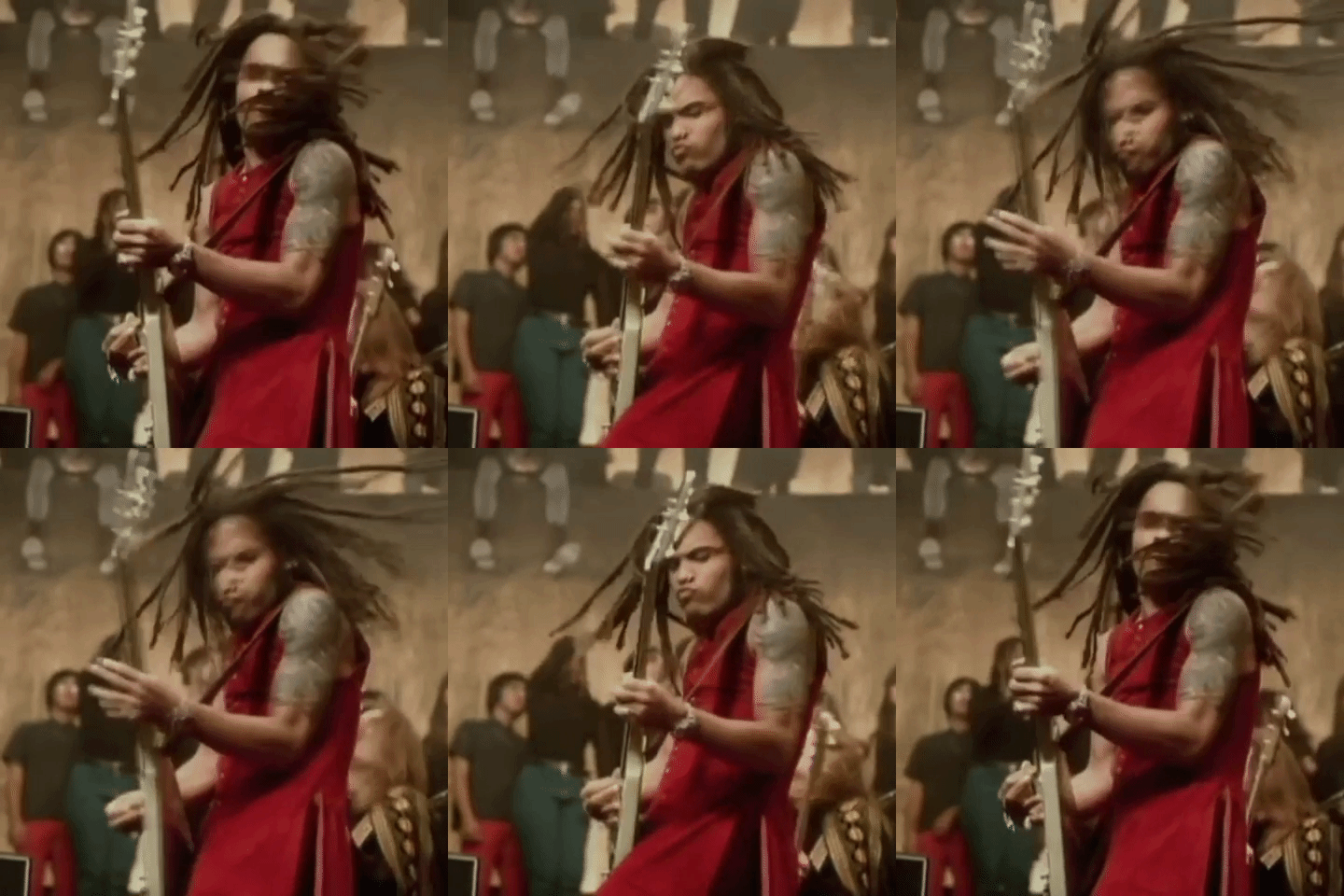
PERFORMANCE MUSIC VIDEOS
This is the staple, it is the oldest type of music video and most videos consist of this. Performance music videos are exactly that, the artist(s) performing the song – but it doesn’t have to be that simple. Where are they performing? It could be in front of an audience which would make it a live stage performance, it could be at a location that matches the feel of a song like the grounds of a country house or how about in a recording studio with acoustic instruments making it a live lounge video. How it’s shot, where it’s shot and how it’s lit are important decisions to make because it will influence the outcome of the video.The good thing about a performance video or even performance elements in a video is that it can fit anywhere and with any artist. How? Simple; you shoot in the style that suits the artist or song. It can be simple and dressed down focusing on really good lighting or it could be something huge and spectacular, it can focus on a massive dance routine or the artist’s sole performance.
NARRATIVE MUSIC VIDEOS
Eventually people got tired of filming performances and putting them on TV like The Jackson 5’s Rockin’ Robin and realised they could use their music videos to tell stories… just like in films.
Narrative music videos are music videos with a story; they have a beginning, middle and end. This allows directors to tell the stories they want, how they want and even in the genres they want. You can tell a story from start to finish like Drake’s Hold On, We’re Going Home, show parts of what seems like a bigger story like The 1975’s Robbers or even an alternative narrative like our very own Remedy by The New Citizen Kane where the audience makes up their own mind on the story. This is where the film maker can really shine because they can tell a story in the genre and cinematography of their choosing, sometimes without adhering to the rules of storytelling.
Songs for the most part are already stories, even if the song doesn’t have lyrics, they all tell stories.
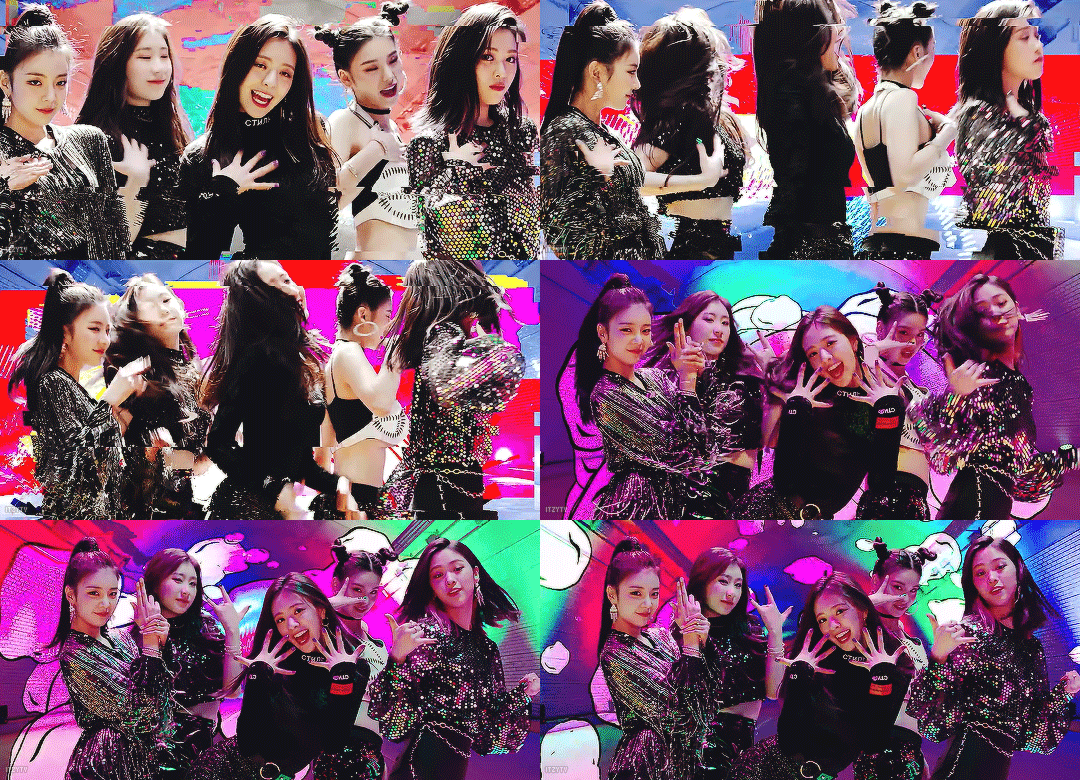
CONCEPT MUSIC VIDEOS
What is a concept music video? The best description I can give is that it is an artistic expression. There’s an idea behind it or theme that drives the visuals like Childish Gambino’s Sweatpants. Now these can be quite fun because where narrative videos can have less rules; concept videos have none. It’s a limitless playground where anything is possible. CGI? Sure. Stop motion fun? Of course. A series of shots depicting different people’s expressions? Absolutely! Interpreting a song and then bringing it to life in a way that only you (or the director) could like the hauntingly spectacular Feathers Falling by Amani.
Now I’m not saying every type of video has a place, but most do. You wouldn’t imagine One Direction having an artistic concept video, this is an approach more akin to non-mainstream or non-pop music. Due to concept music videos not necessarily telling a story (at least via conventional methods), it’s important that the video captures the feel and tone of the song and this approach doesn’t marry well with pop music and their audiences unless it’s a cross-genre.

LYRIC MUSIC VIDEOS
A lyric video is a music video where the lyrics appear on screen. The first level of innovation came by making the font and visuals match the song – sweet font and vibrant colours for a bubble gum pop song, edgy font and more hard-core imagery for heavy metal. The next level of innovation was the style of animation for the visuals and text – slow and sexy or fast and impactful. Those are the basics and can be seen in Jodie Abacus’ video I’ll Be That Friend. Notice the vibrant images matching the tone of the song and the font design? It feels right. But lyric videos don’t stop there, it can even be fused with other video types to create something cool and new. Take Ariana Grande’s Everyday which fuses lyric and performance videos or one of my personal favourites Suit & Tie from Justin Timberlake ft. Jay Z which combines lyric, narrative, concept AND animation! Now how cool is that?
ANIMATED MUSIC VIDEOS
The term “animation” is an umbrella term. We sometimes get artists saying they’d like an animated music video, that could mean anything between cell animation like old fashioned cartoons, CG like Monsters Inc, stop motion like Wallace and Gromit, filming against Green Screen then placing them into another environment and many other variations. They all require different skill sets and disciplines, each very respectable. Animation is basically giving movement to something. In the context of music videos animation can be applied to all types; it can be a narrative stop motion video, a performance video against green screen or a 3D CG concept video full of fun and weird shapes.
Animation is by definition – versatile. Animation should only be used when it’s right, it should feel right and not used as a gimmick. I’m a huge fan of stop motion and the amount of skill, talent and discipline that goes into it and history has some fantastic examples .

STYLES OF MUSIC VIDEOS
ANIMATION
Animation is a growing new form of music videos. Some genres tend to use more animation in their music videos. It is more common in Indie Rock and sometimes Dance. There are three types of animation style music videos: traditional hand-drawn, stop motion and digital. Animation videos tend to be more quirky and unusual because they can be as impossible and outrageous as they can.
"Move Your Feet" is a single by Junior Senior, that was released in May 2003. The style of music generally fits into the pop/hip-hop genre of music. So to portray that same style in the music video, they had to create something original and upbeat.
This music video is the band's most notable video because of its Shynola Animation Art theme that involves a pixel art figure of Junior Senior and a squirrel. Throughout most of the video, we see the figures dancing as well as a lot of colours and lyrics.
IN CONCERT
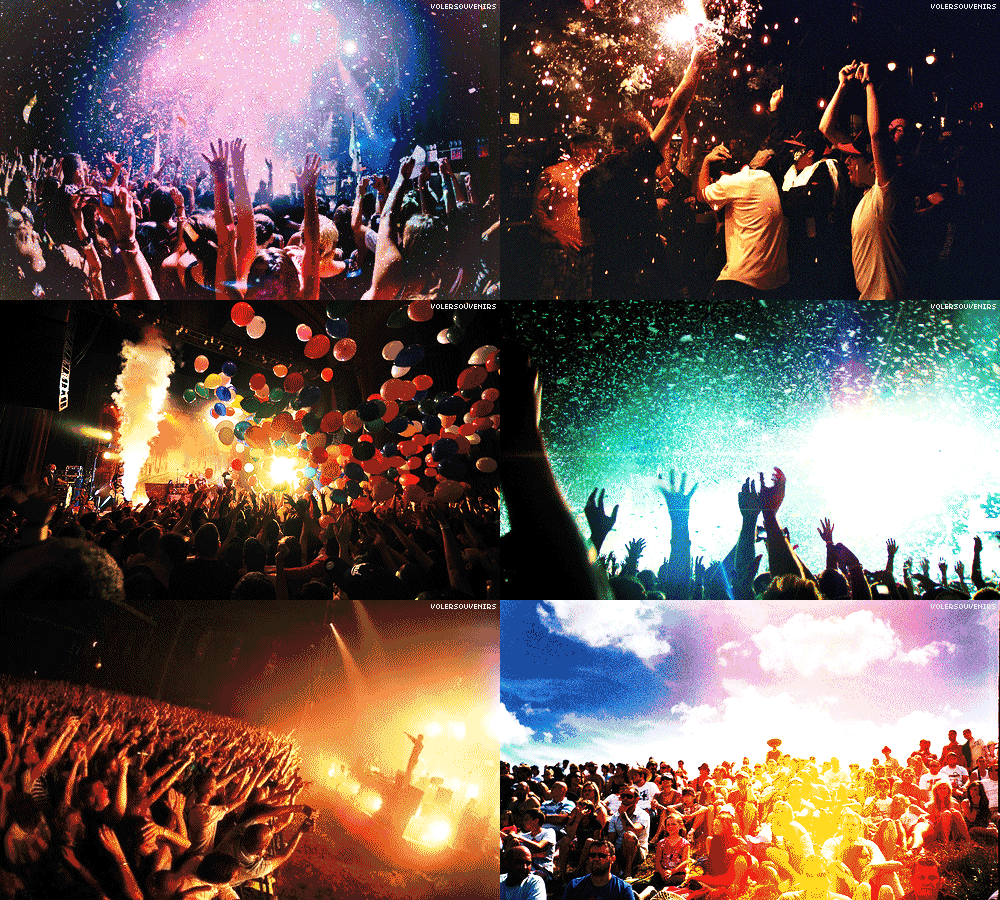
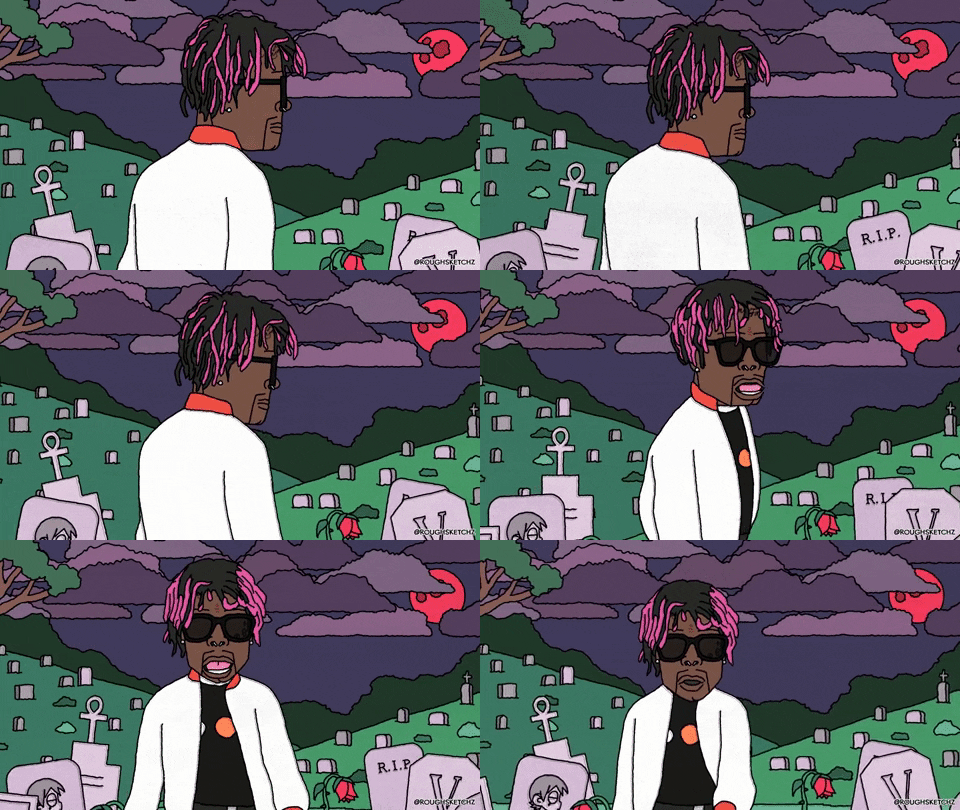
In Concert music videos have a sense of realism and they appeal to viewers who perhaps cannot go and see them in concert all the time, so they can see what it looks like for a change. It also might give viewers an incentive to go and see the band live. Sometimes they can be staged to look like they are live. Feel This Moment" is a song by Pitbull featuring Christina Aguilera that was released in January 2013. The song is about stopping to take a moment and appreciate life. Set to a thumping club beat, the rapper spits "Lets stop time and enjoy this moment."
So I would guess that he tried to think of something that would be a great 'moment' in his life; watching a crowd of people screaming his name to his music. Throughout the music video, we see some shots of him wearing casual clothes, rapping alone in a small room , before (in an expensive suit) he jumps/walks/elevates into a huge arena filled with thousands of screaming fans.
NARRATIVE
Narrative music videos tell a story that normally relates to the song. Sometimes the story is fictional and sometimes it's non-fictional. These videos are popular because they keep the viewers interested and they normally remember the story and the song because of the video.
"Same Love" is a single by Macklemore and Ryan Lewis that was released in July 2012. It was written in support of same-sex marriage specifically referenced to Washington Referendum 74 (which is a Washington state referendum to approve or reject the February 2012 bill that would legalise same-sex marriage in the state).
The video goes through stages in a man's life when he loved his other half, and how he deals with it and becomes as happy as anyone would in a relationship. Most narrative music videos win a lot of awards because of the ideas and messages that are portrayed. They deserve it because directors and writers have to think well about how they want the viewers to watch it.
"Same Love" won 'Best Video with a Social Message' at the MTV VMA's in 2013.

PASTICHE
Pastiche music videos represent a small imitation that is used respectfully from another form of media i.e. film or TV show. This idea is a good way to get a bigger audience because fans of the artist will know about the imitation and the fans of the other form of media will find out about the artist.
"Material Girl" is a single by Madonna that was released in November 1984. The song is about a girl who loves diamonds and jewellery and material gifts.
The music video shows Madonna wearing a rich expensive pink dress and showered in diamonds and jewellery. She is surrounded by a lot of men dancing with her.
IMPRESSIONIST
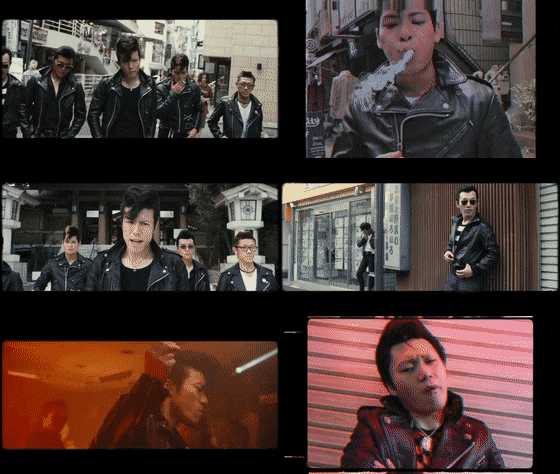
Impressionist means "an artists take/impression on something". So music videos that have a particular theme or style that is portrayed in a unique way by the artist means that it is an impressionist music video.
"Get Away" is a single by Snoop Lion featuring Angela Hunte and was released in January 2014.
The music video fits into the style of both animation, homage and impressionist. It pays homage to the '90s themed Pokemon Games. Nostalgia will flow for fans of the classic Game Boy release as they watch an 8-bit version of Snoop Lion patrolling the reconstructed world reminiscent of the original games.
He even battles a trainer, Major Lazer, who co-produced the track.
PARODY
Parody music videos are designed to mock or tease an original piece of work, normally in a bad way. It is very similar to pastiche, except it generally has a bad and funny way of representing it. Parodies have got a lot more popular in recent years and some Youtube Artists have become famous because of their parodies. "22" Parody is a single by Bart Baker that was released in April 2013. It is a parody of the single "22" by Taylor Swift. In the original music video by Swift, she goes through a day in life when she is 22 years old and shows how most people at her age are at the point in their lives when they can have so much fun.But in this parody version, Baker uses the same tune but doesn't mock the original meaning of the song.
SURREALIST

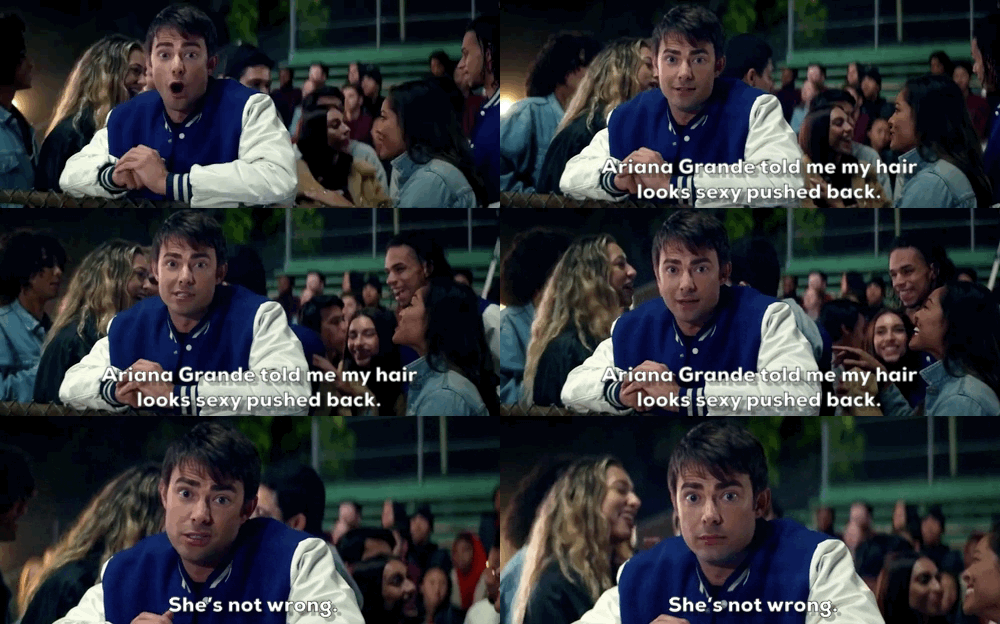
Surrealist music videos are videos that contain a style that are so strange and unreal that it's almost impossible that the situation would ever happen. Surrealist videos sometimes contain a lot of animation. They are sometimes fun and exciting which does appeal to younger children. But some music artists take an impression of a certain artist or sculptor and use their style in the music video.
"Year 3000" is a single by Busted that was released in January 2003. The song describes how the band thinks the world will be like in almost 1000 years. As you could imagine before even listening to the song or watching the video, this idea has endless possibilities for imagination. So surrealism in this video is almost vital.
The story follows Busted getting into a "flux-capacitor" which travels into time to the Year 3000. To make the story more interesting they used animation as well.
INTERPRETATION
Interpretation is a form of music video that means a literal style of video. This means that whatever you hear in the song, is exactly presented in the video. Sometimes it can be word for word in the lyrics, or sometimes it could be an overall story in the theme of the song.
"Get Lucky" is a song that is performed by Daft Punk, however it was covered by Skylar Grey. She re-creates her own version of the song and music video. Throughout the entire video she shows how she is literally very lucky. In the 4 minutes of this video, she wins a car in a game show, she passes every green light when she drives home.
HOMAGE
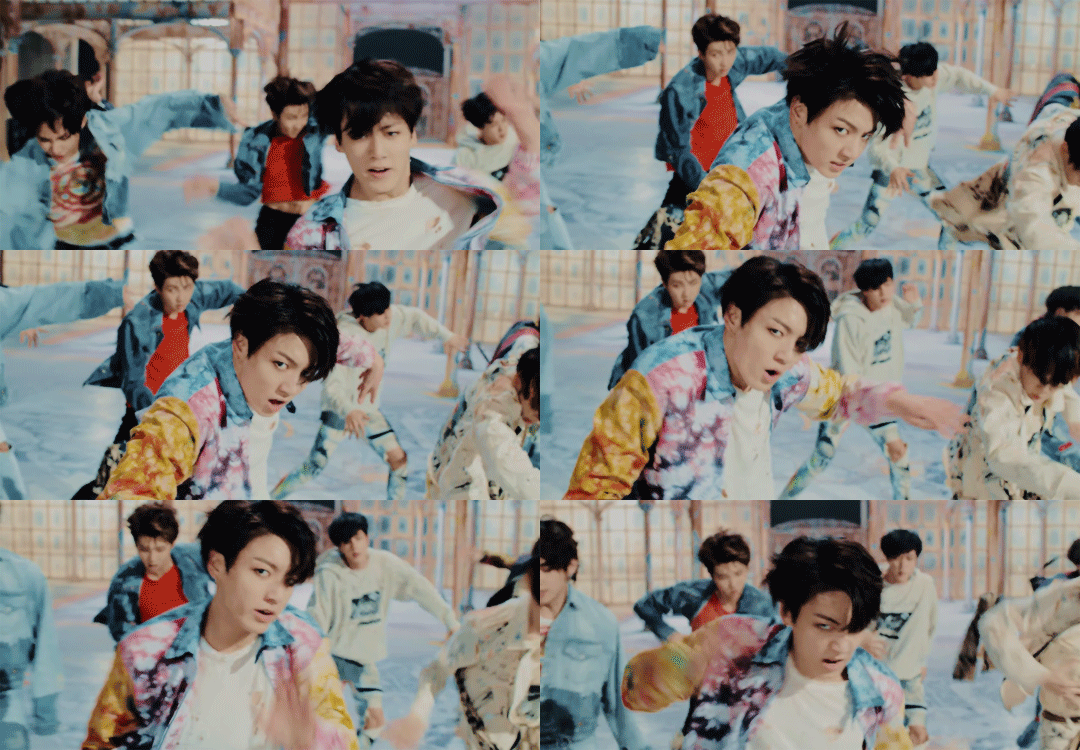
Homage style music videos mean that the video pays a tribute to a particular time or event. It is a way for artists to show their respect to others. These videos can influence viewers and make them remember or sympathize for a specific time or place.
"Hey Brother" is a song performed by Avicii. The music video was released in December 2013. This music video pays homage to the men and women of the armed forces in the US. The video contains clips from the Vietnam War and shows a young boy who imagines his father (who died in the Vietnam War) as the older brother he never had.
INFLUENCE OF COMMERCIALS
Music videos that have an influence of commercials are videos that sometimes mention or involve their whole video around a particular product. This is a good way to advertise certain products, because fans of the artists will take note of the products and be persuaded into thinking that it must be a good product if celebrities are using it.
REFRENCING
Referencing in music videos is a way of portraying a certain other subject. Soundtrack videos sometimes have references to the film themselves. If a music video contains certain references from a film then it creates a bigger audience, a lot like pastiche films.
Beyonce's nickname "Honey Bee" in the video is a clear reference to "Honey Bunny" which was the nickname given to Yolanda, who was one of the two robbers in the famous diner scene of Pulp Fiction.
The "To Be Continued..." title card at the end of the video is a great similarity to John Travolta's line in Pulp Fiction.
The font, style and colours of the text in the video are very similar to the text in Jackie Brown.
When the two girls are having banter in the car, it is a very clear reference of the style in Death Proof.
Before the music video of "Telephone" was created, Lady Gaga had a meeting with Quentin Tarantino and discussed the plot and style of the music video, so there was a big reason that all these references were made.
MUSIC VIDEO TECHNIQUES
Techniques in music videos are different ideas that directors will have and sometimes they can become stereotypical. A technique is a way of producing a music video to make it look interesting and invites a bigger audience.
CUTTING TO THE BEAT
Cutting to the beat is a way of editing a video so that each clip changes at the same time as the beat of the track. Most clips use a 'cut' transition, so you generally 'cut to the beat' of the music.
"Wings" is a single by Little Mix, which was released in 2012. The band has 4 members and the beat is in common time (time signature = 4/4) which works out really easy for the music video. Most of the time, the cuts are to the beat of the song and the cuts include all 4 girls every time. This is a good effect for dance related music videos; as shown there is a dance sequence in the video.
EFFECTS
Visual effects are a way of adding more of a narrative and can normally create more excitement into a music video. Sometimes an audience will be so interested in the technology behind the effects but sometimes they just like the idea of adding more of a story and colour to the video. It keeps them entertained.
"We Made You" is a single by Eminem and was released in 2009. Throughout the video, there are many visual effects that are used with a green-screen e.g. Eminem singing through fire. There are also effects such as the car turning into a transformer, or the effects represented by the Star Trek reference Eminem was conveying. This is a good technique because it keeps the audience entertained and they want to watch the whole thing because they want to know if there are any more effects to look out for.
MIMING AND LIP-SYNC
Miming and lip-syncing is a way of linking the video with the song so it gives the allusion that the artist is singing. This technique is used on the majority of music videos.
"Rockstar" is a single by Nickelback and was released in 2006. The video features random people around the country, miming and lip-syncing along to the recorded version by Nickelback. This effect makes it look more fun and entertaining because we know that a lot of people will relate to the scenario of the song.
PLAYBACK AND LIP-SYNC
This is your News Article. It’s a great place to update your visitors about industry news, or publish relevant announcements about your company. Been in the press recently? Don’t keep it to yourself! Let visitors know about it, and add a link to the original article or write-up.
Playback and lip-sync is a technique that is used to create the allusion of a video being in slow motion, but the lip-syncing is still timed with the correct speed of the music. So when recording the footage, the music will be doubled in speed and recorded. And then when the video comes to being edited, it is slowed down by 50% so that the lip-syncing is timed right but it still looks slow.
"Burn" is a single by Ellie Goulding that was released in 2013. The song features a lot of lights and people running around having a good time, but almost all of the footage has been slowed down, however the lip-syncing to Ellie's music is timed to perfection. The technique creates a dreamy looking effect that makes Ellie come off as quite angelic and pretty. A fan of Ellie Goulding will know that most of her music videos use the playback and lip-sync technique regularly.
MULTI-MAGE
Multi-mage is a technique where multiple videos are on one screen. This generally shows more than one thing going on and the editing is critical with this technique.
Pentatonix is an acapella group, and they produced a medley of songs by Daft Punk. The creative part of this video was the use of multi-mage because there are 5 members of the band. The editing was done very well and also used the technique of cutting to the beat because each cut refers to a video changing position. The size, timing and position of each video was excellent and it was entertaining to watch.
CAMERA MOVEMENTS
Just like in any other form of video media, there will always be certain camera movements that are used for different reasons; an establishing shot will generally set the scene at the beginning; a long shot will normally set out the location of a closer scene, so the audience have a better understanding of the atmosphere; mid shots and close ups will be used to see the artists face and see their emotions depending on the music style; extreme close ups would normally be used if the music video wanted to capture emotion, and so an extreme close up on a tear rolling down a cheek might be used. Whereas, different movements can also be chosen depending on a scenario; tracking is used to follow a band, which could be used if it is a continuous shot; a panning shot will normally be used to set another scene and show the audience the surroundings.
"Hollaback Girl" is a single by Gwen Stefani and was released in 2005. Throughout the music video, there are multiple shots of different tracking and panning shots which are slow and fast. It gives the music video a good sense of energy because they're always on the move and presents the artist in a lively way. There are also a lot of camera shots as well which makes the music video look a lot more productive and visual; we know exactly whats going on and where about they all are as well as knowing everyones expression.
CAMERA ANGLES
Just like movements, camera angles make a huge impact on the meaning and style of the music video. Wherever a camera is placed can show the power of the artist/characters. Or sometimes it can show an exact location from where we should be seeing it. By choosing different angles, the viewers have a different view of the action, which makes it more interesting and everybody will have their own way of watching it.
"Salute" is a single by Little Mix that was released in 2014. The song is about how women need to tackle equality in the world and stand up for themselves. The music video features a lot of different angles and movement, but particularly from a low angle view. This is because the music video needs to demonstrate the power that the girls need to have to overcome this problem. With the girls up high or, the camera down low, we are looking up at them as leaders, which is what they want viewers to feel like when watching this music video.
CHROMA KEY
Chroma Key effects are when music videos are shot in front of a green screen. This means that a block colour is put behind the artist and is replaced by another picture/video. Sometimes the quality doesn't always look as good if the background is of a specific location but they are sometimes used for upbeat dance songs. A lot of music videos use chroma key to add a comical sense to their music. It's a technique used to try and interest and entertain the viewers more. Chroma key is also a good technique when the budget for a music video isn't very big.
"Kiss You" is a single by One Direction that was released in 2013. The video is surrounded by chroma key effects. They have used this to create that comical side of their personalities. We even sometimes see the works behind the chroma key when they are being filmed. It makes them look fun and entertaining. It also makes them look friendly because they know they don't need a big budget to make their fans happy.
MUSIC VIDEO CONVENTIONS
Conventions of music videos are the style of rules that most people follow sub-consciously. Every music video tends to follow some sort of convention that every other music video does. Sometimes they can be really different but it is not obvious at times.
LYRIC INTERPRETATION
Lyric Interpretation is the way that someone watches a music video in relation to the lyrics of the song. This convention is popular because a lot of people like to have their own view of what they think it means.
"Just" is a single by Radiohead that was released in 1995. The music video features a man who lies down in the middle of the street, while people around him try to work out why he's there. Throughout the entire video, everybody's speech is muted and is replaced by subtitles. During the music video, the man refuses to tell them the reason for his behaviour in the whole video, however at the end of the music video he tells them but the subtitles cut out, before everyone who was interrogating him start lying on the ground with him. We (the audience) are automatically guessing what he had said that could have changed everybody's minds.
The good thing about it, is that people remember the video more than the music, which gets them recognised and people will just remember them for this video.
EXTENDING OR CONSOLIDATING SONG'S MEANINGS
To capture the viewer's attention and emotion, a director will produce a music video that generally expands the songs meaning and "tug at your heart strings". Sometimes they will normally have a different meaning to the lyrics. So it's almost like lyric interpretation but there is a clear meaning, even if it doesn't represent the lyrics.
"Beautiful" is a single by Christina Aguilera that was released in 2002. The music video features many people sitting/standing/lying around half naked, which depicts that they aren't very happy with their bodies and the way they look. This music video uses this convention a lot because it definitely gets people emotional when watching, especially because most people can relate to it. Even when she says "I am beautiful...", it doesn't just mean her appearance, but her personality as well which is how the song extends the meaning.
ALLUSION
Allusion in music videos is a convention that is related to the styles of referencing or pastiche. It makes a reference to something else; very similar to intertextual referencing.
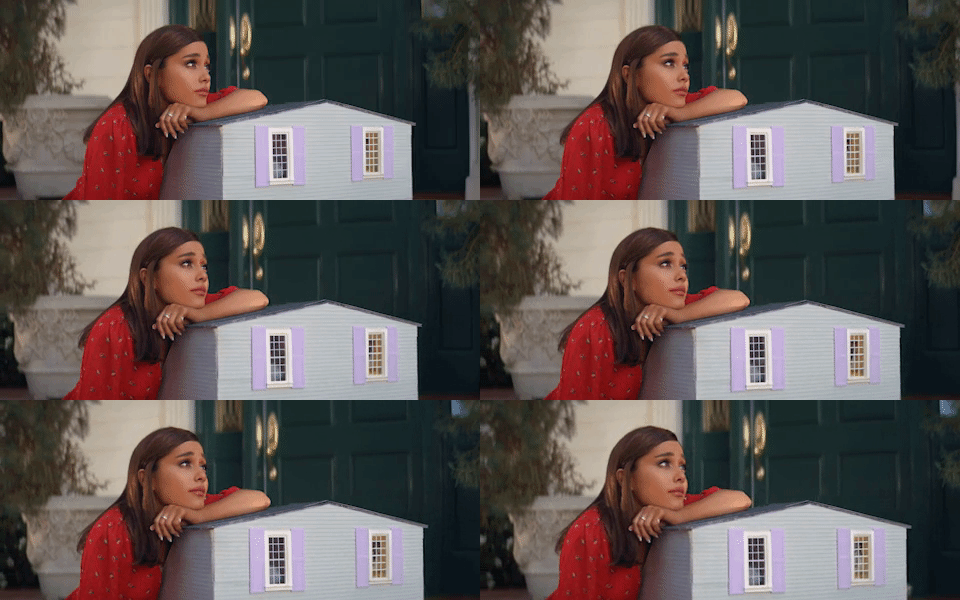
"Right There" is a single by Ariana Grande featuring Big Sean, and was released in 2013. The music video uses the allusion convention to represent the movie Romeo and Juliet. This is effective because it gives a hint to the audience about the style of music or song meaning before it has even started. After the first 20 seconds, we already know that the song is about love and being happy in love.
LINKS TO OTHER ARTISTS
This is a convention that is very similar to allusion in the way that it references other artists, but it generally features an artist in the music video.
"Last Friday Night (T.G.I.F.)" is a single by Katy Perry that was released in 2011. This music video features another artist named Rebecca Black. I like this convention because it references another artist and promotes them as well as the main artist. It also shows a bond between the two artists and sometimes can lead to future productions together.

THEORISTS
Andrew Goodwin

Goodwin states that ‘Music videos ignore common narrative as they are essentially advertisements. As consumers, we make up our own meaning of a song in our minds: a music video can anchor meaning and gives the record company/artist a method of anchoring meaning.’ Andrew Goodwin expressed that the editing of the film is cut to the beat. This allows the viewer to follow the narrative (if a concept video) at the same tempo as the music and subconsciously follow the plot easier. Also the visuals displayed are usually repeated, which emphasises the repetition of the lyrics and rhythm in the song.
Music videos demonstrate genre characteristics (e.g. stage performance in a metal video, dance routine for a girl boy band.)
This convention explains how Goodwin notice a music video’s visuals either had a complete similarity or direct contrast to the lyrics of the song.
An example of this is within the music video ‘Someone Like You’ by Adele’ a lyrical phrase includes ‘for me, it isn’t over’, there is reaction shot of the artist, appearing to be very emotional in connection with this. This make the audience sympathise with Adele as a result.
There is a relationship between the lyrics and visuals (illustrative, amplifying, or contradicting).
Goodwin identified that the visuals within a music video may be edited in time to the lyrics/ change in tempo of the music. He also stated that the visual are commonly repeated within a chorus to emphasize the repetition in lyric and beat.
Genre-related style and iconography is present.
Goodwin recognised that most artists/directors have a certain style repeating certain actions within theory music videos in order to establish this as their ‘trademark’ and therefore allowing their to be recognized due it to reoccurring often. This represents the style of the music the artist is represent and is a marketing strategy in order to be remembered in years to come.
The demands of the record label include the need for lots of close-ups of the artist, and the artist may develop motifs which recur across their work (a visual style).
Goodwin identified that it is a common feature for record labels to use close ups of the artist/vocalist in order to promote the sales of the individual song and album/single. This convention is used in order to show the artist throughout the video is most common with female artist as provocative angles are often used to create sexual imagery of the artist following Laura Mulvey’s Male Gaze Theory causing a fetish from the audience towards the artist.
There is frequently reference to the notion of looking (screens within screens, telescopes, etc.) and particularly voyeuristic treatment of the female body.
Goodwin recognised that many music videos tend to include voyeuristic images and camera angles of women in order to entice a male audience’s interest in the artist also the lyric to which these shots represent. For example, in the artist Rihanna’s music video ‘What’s my Name’. We can see at this point Rihanna walking through a supermarket. There is an over the shoulder shot of a man, who is out of focus looking at her. With the misé-en-scene used in the scene in terms of costume Rihanna wears a pair of revealing shorts with fluorescent colours.
There is often inter-textual reference (to films, TV programmes, other music videos, etc).
Goodwin recognised that it was not uncommon for a viewer to notice either the visuals or lyrics of song to be a direct reference to another media text. This used to engage the audience and provide them gratification if they recognise the link. For example in MIKA’s ‘Popular Song’ there is a reference to the music ‘Wicked’ in terms of lyrics and melody in the chorus.
Roland Barthes


Vladimir Propp


Roland Barthes was a French literary theorist, philosopher and critic. Barthes’ ideas explored a diverse range of fields and he influenced the development of schools of theory including structuralism, existentialism and social theory to name but a few.
Barthes describes a text as. “a galaxy of signifiers, not a structure of signifies; it has no beginning; it is reversible; we gain access to it by several entrances, none of which can be authoritatively declared to be the main one; the codes it mobilises extend as far as the eye can read, they are indeterminable. The systems of meaning can take over this absolutely plural text, but their number is closed, based as it is on the infinity of language.” – 1974.
Barthes argued that the reader produces new meanings when reading a text, making use of previous experience. Therefore, different people read different things from a text. Texts may be open, this means that they may have many meanings or interpretations. Texts may also be closed, this means that there is only one meaning. Barthes had a series of narrative codes. The most well known is the enigma code. This is the ‘hook’ or mystery to be resolved for the audience. He also believed the narrative was made up of ‘signifiers’, objects that brought meaning to the narrative.
Music videos often create predictable ideas and representations about people, places and society and ‘Myths’ are created, which seem to support the dominant ideology of society. As such, it could be argued that most mainstream music videos are reactionary.
Barthes explains that ‘myth is a type of speech’. What Barthes means by this is that myth is a system of communication. Myth is not a particular object but rather the ‘the way in which (an object) utters a message’. Barthes explains that myth ‘is a second-order sociological system‘. Barthes is arguing that myth is a metalanguage; an overarching language which rationalises and organises thought and perception. Myth is the system of communication which naturalises the political nature of a products’ consumption and production; myth is a system of communication which naturalises dominant cultural and historical values and attitudes.
Stereotypically in the media ‘Men were much more likely to adventurous, active, and victorious, whereas women were more frequently shown as weak, ineffectual, victimized, supportive, or laughable or merely ‘token females.’ Some media texts challenge these stereotypical gender representations such as in the film 'Tombraider' in which 'Laura Croft' plays the leading protagonist, seen as 'adventurous'.
Propp identified a sequence of narrative elements (or 'functions') that typically occurred within Russian fairy tales. He identified 31 functions in Russian folklore and fairy tales. These functions occurred in a typical order within each story, with some variation. This type of structural analysis of folklore is the "syntagmatic" manner of assessment (as termed following Lévi-Strauss 1964: 312). Another example of syntagmatic analysis is the Hero's journey. This focus on the events of a story and the order in which they occur is in contrast to another form of analysis, "paradigmatic" (cf. Sebag 1963:75). That describes instead the underlying pattern (usually based upon a priori binary principle of opposition) of the folkloric text. For paradigmatic analysis, elements of the plot may be taken out of their "given" chronological order within the story and regrouped in various analytic schemes.
Respectively equivalent to syntagmatic and paradigmatic are the terms "diachronic" and "synchronic". Diachronic covers the sort of analysis that conveys a sense of traversing the highs and lows of a story, like riding the pattern of a sine wave.[2] The second term, synchronic, is where the story is instead absorbed as a whole, like the pattern of a circle. Most literary analyses are synchronic, offering a greater sense of unity among the components of a story. Although both structural analyses convey partial information about the story, each angle of analysis delivers a different set of information.
After the initial situation is depicted, the tale takes the following sequence of functions:
-
ABSENTATION: A member of the hero's community or family leaves the security of the home environment. This may be the hero themselves, or some other relation that the hero must later rescue. This division of the cohesive family injects initial tension into the storyline. This may serve as the hero's introduction, typically portraying them as an ordinary person.
-
INTERDICTION: A forbidding edict or command is passed upon the hero ('don't go there', 'don't do this'). The hero is warned against some action.
-
VIOLATION of INTERDICTION. The prior rule is violated. Therefore the hero did not listen to the command or forbidding edict. Whether committed by the Hero by accident or temper, a third party or a foe, this generally leads to negative consequences. The villain enters the story via this event, although not necessarily confronting the hero. They may be a lurking and manipulative presence, or might act against the hero's family in his absence.
-
RECONNAISSANCE: The villain makes an effort to attain knowledge needed to fulfill their plot. Disguises are often invoked as the villain actively probes for information, perhaps for a valuable item or to abduct someone. They may speak with a family member who innocently divulges a crucial insight. The villain may also seek out the hero in their reconnaissance, perhaps to gauge their strengths in response to learning of their special nature.
-
DELIVERY: The villain succeeds at recon and gains a lead on their intended victim. A map is often involved in some level of the event.
-
TRICKERY: The villain attempts to deceive the victim to acquire something valuable. They press further, aiming to con the protagonists and earn their trust. Sometimes the villain make little or no deception and instead ransoms one valuable thing for another.
-
COMPLICITY: The victim is fooled or forced to concede and unwittingly or unwillingly helps the villain, who is now free to access somewhere previously off-limits, like the privacy of the hero's home or a treasure vault, acting without restraint in their ploy.
-
VILLAINY or LACKING: The villain harms a family member, including but not limited to abduction, theft, spoiling crops, plundering, banishment or expulsion of one or more protagonists, murder, threatening a forced marriage, inflicting nightly torments and so on. Simultaneously or alternatively, a protagonist finds they desire or require something lacking from the home environment (potion, artifact, etc.). The villain may still be indirectly involved, perhaps fooling the family member into believing they need such an item.
-
MEDIATION: One or more of the negative factors covered above comes to the attention of the Hero, who uncovers the deceit/perceives the lacking/learns of the villainous acts that have transpired.
-
BEGINNING COUNTERACTION: The hero considers ways to resolve the issues, by seeking a needed magical item, rescuing those who are captured or otherwise thwarting the villain. This is a defining moment for the hero, one that shapes their further actions and marks the point when they begin to fit their noble mantle.
-
DEPARTURE: The hero leaves the home environment, this time with a sense of purpose. Here begins their adventure.
-
FIRST FUNCTION OF THE DONOR: The hero encounters a magical agent or helper (donor) on their path, and is tested in some manner through interrogation, combat, puzzles or more.
-
HERO'S REACTION: The hero responds to the actions of their future donor; perhaps withstanding the rigours of a test and/or failing in some manner, freeing a captive, reconciles disputing parties or otherwise performing good services. This may also be the first time the hero comes to understand the villain's skills and powers, and uses them for good.
-
RECEIPT OF A MAGICAL AGENT: The hero acquires use of a magical agent as a consequence of their good actions. This may be a directly acquired item, something located after navigating a tough environment, a good purchased or bartered with a hard-earned resource or fashioned from parts and ingredients prepared by the hero, spontaneously summoned from another world, a magical food that is consumed, or even the earned loyalty and aid of another.
-
GUIDANCE: The hero is transferred, delivered or somehow led to a vital location, perhaps related to one of the above functions such as the home of the donor or the location of the magical agent or its parts, or to the villain.
-
STRUGGLE: The hero and villain meet and engage in conflict directly, either in battle or some nature of contest.
-
BRANDING: The hero is marked in some manner, perhaps receiving a distinctive scar or granted a cosmetic item like a ring or scarf.
-
VICTORY: The villain is defeated by the hero – killed in combat, outperformed in a contest, struck when vulnerable, banished, and so on.
-
LIQUIDATION: The earlier misfortunes or issues of the story are resolved; object of search are distributed, spells broken, captives freed.
-
RETURN: The hero travels back to their home.
-
PURSUIT: The hero is pursued by some threatening adversary, who perhaps seek to capture or eat them.
-
RESCUE: The hero is saved from a chase. Something may act as an obstacle to delay the pursuer, or the hero may find or be shown a way to hide, up to and including transformation unrecognisably. The hero's life may be saved by another.
-
UNRECOGNIZED ARRIVAL: The hero arrives, whether in a location along their journey or in their destination, and is unrecognised or unacknowledged.
-
UNFOUNDED CLAIMS: A false hero presents unfounded claims or performs some other form of deceit. This may be the villain, one of the villain's underlings or an unrelated party. It may even be some form of future donor for the hero, once they've faced their actions.
-
DIFFICULT TASK: A trial is proposed to the hero – riddles, test of strength or endurance, acrobatics and other ordeals.
-
SOLUTION: The hero accomplishes a difficult task.
-
RECOGNITION: The hero is given due recognition – usually by means of their prior branding.
-
EXPOSURE: The false hero and/or villain is exposed to all and sundry.
-
TRANSFIGURATION: The hero gains a new appearance. This may reflect aging and/or the benefits of labour and health, or it may constitute a magical remembering after a limb or digit was lost (as a part of the branding or from failing a trial). Regardless, it serves to improve their looks.
-
PUNISHMENT: The villain suffers the consequences of their actions, perhaps at the hands of the hero, the avenged victims, or as a direct result of their own ploy.
-
WEDDING: The hero marries and is rewarded or promoted by the family or community, typically ascending to a throne.
Some of these functions may be inverted, such as the hero receives an artifact of power whilst still at home, thus fulfilling the donor function early. Typically such functions are negated twice, so that it must be repeated three times in Western cultures.
GENRE THEORY
Genre Theory is a collective term used to describe theoretical approaches that are concerned with how similar situations generate typified responses called genres, which serve as a platform for both creating an understanding based on shared expectations and also shaping the social context. Genre Theory has its origins in the study of literary genres, but has been expanded to include a wide range of genres from everyday examples such as recipes and apologies to workplace writing genres such as proposals and medical records. The branch of Genre Theory that is most often associated with technical communication is called Rhetorical Genre Studies (RGS) or North American Genre Theory and is known for its emphasis on understanding genres as inherent components of recurrent social action such as typical workplace situations. For example, according to RGS, the genre of proposals is an indispensable element in the frequently occurring business situation of making an offer.
GENRE
A music genre is a conventional category that identifies some pieces of music as belonging to a shared tradition or set of conventions. It is to be distinguished from musical form and musical style, although in practice these terms are sometimes used interchangeably.not in citation given] Recently, academics have argued that categorizing music by genre is inaccurate and outdated.
Music can be divided into different genres in many different ways. The artistic nature of music means that these classifications are often subjective and controversial, and some genres may overlap. There are even varying academic definitions of the term genre itself. In his book Form in Tonal Music, Douglass M. Green distinguishes between genre and form. He lists madrigal, motet, canzona, ricercar, and dance as examples of genres from the Renaissance period. To further clarify the meaning of genre, Green writes, "Beethoven's Op. 61 and Mendelssohn's Op. 64 are identical in genre – both are violin concertos – but different in form. However, Mozart's Rondo for Piano, K. 511, and the Agnus Dei from his Mass, K. 317 are quite different in genre but happen to be similar in form." Some, like Peter van der Merwe, treat the terms genre and style as the same, saying that genre should be defined as pieces of music that share a certain style or "basic musical language." Others, such as Allan F. Moore, state that genre and style are two separate terms, and that secondary characteristics such as subject matter can also differentiate between genres. A music genre or subgenre may also be defined by the musical techniques, the style, the cultural context, and the content and spirit of the themes. Geographical origin is sometimes used to identify a music genre, though a single geographical category will often include a wide variety of subgenres. Timothy Laurie argues that since the early 1980s, "genre has graduated from being a subset of popular music studies to being an almost ubiquitous framework for constituting and evaluating musical research objects".
Among the criteria often used to classify musical genres are the trichotomy of art, popular, and traditional musics.
Alternatively, music can be divided on three variables: arousal, valence, and depth. Arousal reflects the energy level of the music; valence reflects the scale from sad to happy emotions, and depth reflects the level of emotional depth in the music. These three variables help explain why many people like similar songs from different traditionally segregated genres.
THEORISTS
Andrew Goodwin
Music videos demonstrate genre conventions. Certain features are expected out of a video depending on the genre of the music. Rock bands tend to opt for stage performances, showing the singer shouting down a microphone, the guitarists thrashing the chords and the drummer putting all their body into hitting the drums, expressing how ‘tough’ and ‘hard’ rock is.There is a relationship between the music and the visuals – both the lyrics and the tone. Lyrics match up with the Music Video’s visuals. When you hear a song, you feel the emotion and the message wanting to be put across by the artist which is usually what is then seen in the music video. Themes, mise-en- scene and events of the video match with lyrics of the song, to help to portray the message of the song. The tone of the music must match the visuals featured in music video. The cuts and edits of the video are in sync the rhythm and beat of the song matching cuts or effects specific drum beats or notes.
Sven E Carlsson
According to Sven E Carlsson, music videos can fall under two categories: Performance and Conceptual. Performance – this is where the videos mostly focus on the artist/artist’s in some way. There can be three types of performance, dance performance, song performance and instrumental performance. The point of the music video is to show the artist off as much as they can.
Performance. When it comes to performance, Carlsson believes there are three types: • Commercial Exhibitionist - the performer becomes an item throughout the video as the point is just to advertise themselves. The performer is like an object for the audience and the music video is like an advert for them. • Televised Bard – this is another type of performance where the singer is singing about a story and uses the images around them as personal images. • Electronic shaman – in some videos the shaman isn’t shown and the story they tell is anchored by the images of the video instead of them actually being involved. • What type of performance is this?
Conceptual • Within the music video, the artist will use images unrelated to them, which may have artist ambitions. This may include shots of scenery, or narrative shots which take the focus away from the artist.
Deborah Holdstein
Messages and Structures The three ‘striking qualities’ of a star in a music video: 1. The star as a fantasy ‘seer’ or prophet 2. The star as a political commentator or narrator 3. The star as a mediator or point of resolution for social conflict
Messages and Structures -“Videos seem to divide into two categories: Those with allegedly explicit ‘political’ themes, and those which revive the traditional U.S. film musical.” The fantasy video is based entirely on performance. This format puts “the group or star in a mythical, medieval, exotic or surrealistic series of images and locations.” “Videos make the artist more accessible to the fans. When they come to a performance, then they bring or wear things they‘ve seen in the video.” “In the past, artists portrayal will only be left to the viewers imagination or how they are seen in concert, the record album cover pose, photographs and interviews in Rolling Stone, Time.” But nowadays, “the video image is quicker and more powerful.”